Following the events of August 30, 2023, and the change in governance that occurred after the overthrow of President Ali Bongo Ondimba, Gabon entered a two-year transition period. This transition was marked by several institutional and political milestones aimed at restoring lasting constitutional order.
Over this period, civil society mobilized to relay the expectations and priorities of the general public to the transitional authorities, aiming to ensure effective representation of citizens’ aspirations and their integration into new public policies. Consequently, following the National Dialogue held in April 2024, a new Constitution was adopted by referendum in November 2024, paving the way for the organization of national elections.
Civil society organizations' involvement in the electoral process led to the creation of the first groups of national observers and the active participation of citizens in efforts to restore and consolidate democratic institutions.
Through its project to support civil society organizations during the transitional elections in Gabon, funded by the French Ministry for Europe and Foreign Affairs and the European Union, International IDEA supported citizen engagement to promote free, transparent, and peaceful presidential and local elections. This support materialised in the creation of two monitoring units, including a monitoring unit for electoral violence led by the NGO Women Go for Peace and the Network of Human Rights Defenders in Central Africa (REDHAC).
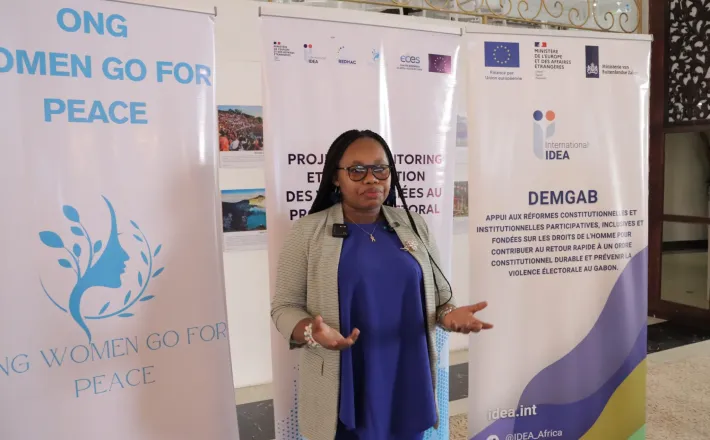

Hear from women leading change in the political space share their experiences and insights.

Explore a wide-range of audio-visual resources on key topics of gender equality.

Hear from a diverse list of panelists and guests as they reflect on critical issues pertaining Women in Politics.